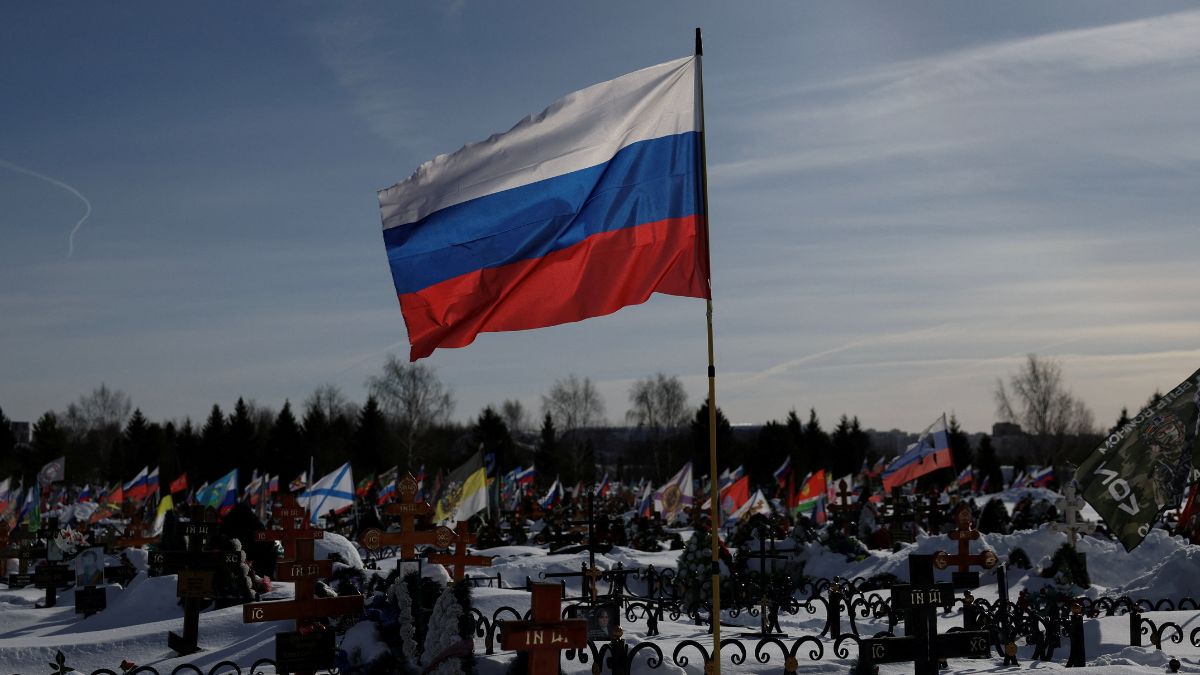
 "After 4 years of war, can Russia and Ukraine make peace in 2026?")
Four years after Russian President Vladimir Putin ordered forces into Ukraine, Europe remains engulfed in its most destructive conflict since World War II.
The war formally crossed into its fifth year on Tuesday, February 24, 2026, with no comprehensive ceasefire in place and no final political settlement in sight.
Tens of thousands of civilians have been killed or wounded, millions have been displaced, and both militaries have suffered casualties on a scale not seen in any European war for decades.
Despite renewed diplomatic engagement involving Washington, Moscow and Kyiv, the central disputes — control of territory seized by Russia, Ukraine’s future security arrangements, and Moscow’s political demands on Kyiv — continue to block any durable peace framework.
The past year has also brought new strains to Ukraine’s war effort. Western military aid has declined overall, even as European countries attempt to fill gaps left by policy shifts in the United States.
At the same time, Russian forces have continued to strike Ukraine’s energy grid and civilian infrastructure, deepening humanitarian suffering and complicating Kyiv’s negotiating position.
As of now, a final settlement remains elusive.
Why a Russia-Ukraine peace deal remains distant
The United States has spent the past year attempting to bring Russian and Ukrainian representatives into direct dialogue as part of a renewed push for a negotiated end to the conflict.
The administration of Donald Trump has hosted or facilitated multiple rounds of contact with delegations from both capitals. These efforts have included meetings in Abu Dhabi and follow-up talks in Geneva on February 17-18 earlier this month.
American officials involved in the process say Moscow has indicated a willingness to explore an agreement. Russian representatives have conveyed to US negotiators, including presidential envoy Steve Witkoff, that the Kremlin is open to a deal.
However, these diplomatic gestures have unfolded alongside continued Russian missile and drone attacks on Ukrainian cities, leaving large numbers of civilians without reliable electricity, water and heating during winter months.
Critics of the talks, including Ukraine’s supporters in the United States and former American officials, argue that Russia is using negotiations to gain time while consolidating limited territorial advances in eastern Ukraine.
The Geneva meeting concluded after only two hours.
For Kyiv, the overriding objective is to bring active combat to a halt. The unresolved issue is what Ukraine may be forced to concede in return for a cessation of hostilities.
Ukrainian officials maintain that any territorial outcome should be determined by the position of forces when the fighting stops, rather than by preconditions imposed by Moscow.
Russia, by contrast, has insisted that Ukrainian forces withdraw from the Donbas region before the Kremlin will agree to full-scale peace negotiations. Given domestic political realities in Ukraine and the heavy sacrifices made over four years of fighting, such a demand remains unacceptable to Kyiv.
Russian officials nonetheless believe time is on their side, calculating that continued military pressure will eventually allow Moscow to secure control over Donbas without compromise.
This impasse has created what analysts describe as a risk of endless ceasefire discussions that do little to reduce the violence. Moscow may periodically agree to brief pauses in fighting as a show of goodwill, even as Russian forces continue to strike Ukrainian infrastructure and civilian areas.
Under this scenario, Ukraine would face ongoing destruction of power plants, water systems and transport networks while negotiations stall.
Russia itself confronts a parallel dilemma. If the Kremlin succeeds in pushing Kyiv into substantive talks resembling capitulation — similar to negotiations held in Istanbul during the early weeks of the war — Moscow would still need to decide which of its far-reaching demands it is genuinely prepared to compromise on.
Beyond territorial claims, Russia’s stated objectives extend into Ukraine’s internal political orientation. The Kremlin seeks to reshape Ukraine into a state firmly aligned with Russian interests rather than one perceived as hostile.
This includes political conditions aimed at curbing Ukrainian nationalism, legitimising pro-Russian political forces, securing formal recognition for the Russian language, and restoring the influence of the Russian Orthodox Church within Ukrainian society.
Moscow is also demanding sweeping security concessions: sharp reductions in the size of Ukraine’s armed forces, the termination of Kyiv’s military cooperation with Nato countries, and prohibitions on the deployment of long-range weapons or Western military infrastructure on Ukrainian territory.
Even if Kyiv were forced to accept such conditions under international pressure, analysts warn that any agreement would likely prove fragile. Ukraine’s political elites and broader society would struggle to implement provisions that amount to coerced loyalty to Moscow.
Past experience with agreements aimed at resolving conflict in eastern Ukraine before 2022 suggests that imposed settlements can unravel, leading to renewed escalation.
For the US, a formally signed agreement could allow Washington to claim a diplomatic breakthrough, but a deal lacking domestic legitimacy in Ukraine would be prone to collapse, potentially damaging US credibility as a mediator.
Pressure is also growing within Europe to re-engage diplomatically with Moscow, with the prospect of more frequent high-level contacts and softened rhetoric.
Yet the Kremlin is likely to condition any genuine rapprochement on European willingness to debate the continent’s security architecture and to scale back military assistance to Kyiv.
European capitals are neither prepared for direct military confrontation with Russia nor willing to negotiate away Ukraine’s security.
What Zelenskyy has said about Kyiv’s position
Ukrainian President Volodymyr Zelenskyy has openly acknowledged the immense fatigue felt across Ukrainian society after nearly four years of continuous warfare.
Speaking in an interview marking the fourth anniversary of Russia’s full-scale invasion, he described the conflict as an existential struggle for Ukraine’s survival and rejected any settlement that would amount to surrendering the country’s sovereignty or future.
“They have to stay with a democratic country which is fighting against one person. Because this person is a war. Putin is a war. It’s all about himself. It’s all about one person. And the country, all his country is in prison," Zelenskyy told CNN, appealing for sustained international backing, particularly from Washington.
“If they really want to stop Putin, America’s so strong," he added. When asked whether enough pressure was being placed on Moscow, he responded with a “No."
Zelenskyy said agreeing to Russia’s demands would amount to forfeiting Ukraine’s future.
“We can’t just give him everything he wants. Because he wants to occupy us. If we give him all he wants, we will lose everything, all of us, people will have to run away or be Russian," he said.
While he indicated that Kyiv could consider freezing active combat along existing front lines as a temporary measure, he firmly rejected any proposal requiring Ukrainian forces to abandon territory they currently hold in eastern Donetsk.
“Russia wants (us) just to withdraw our army. We can’t be such, sorry, foolish guys. We are not children. We went through this war, during all these years, and so we just, we can’t give them the country on (a) plate," he said.
The Ukrainian leader also highlighted the civilian consequences of territorial concessions. “For people who live there, it’s very important what security they will have, 200,000 people live there. What do I have to say (to them), ‘Okay, bye-bye. We go away. You are Russian from this moment?'"
Addressing criticism over postponed elections, Zelenskyy pointed to martial law restrictions that prohibit voting during wartime. “What do they want? Another president?" he said, adding that Trump had not personally indicated whether he wanted a change in Ukraine’s leadership.
In a separate message posted on X, Zelenskyy argued that Russia’s invasion has already widened into a broader global confrontation. “There are different views on World War III. I believe Putin has already started it," he wrote, describing Ukraine as an “outpost" preventing the war from spreading further.
The Ukrainian leadership continues to frame any concessions on sovereignty or political independence as unacceptable, even as the country faces declining military aid and sustained infrastructure damage.
How the Russia-Ukraine War has fared so far
According to a recent assessment by the Center for Strategic and International Studies, the combined number of soldiers killed, wounded or missing on both sides may be as high as 1.8 million.
The report estimates that Russia suffered around 1.2 million military casualties between February 2022 and December 2025, including up to 325,000 fatalities — described as the highest number of troop deaths endured by any major power in a single conflict since World War II.
Moscow has not published updated battlefield casualty figures since January 2023, when it acknowledged that more than 80 soldiers were killed in a Ukrainian strike, bringing the total number of confirmed Russian military deaths to just over 6,000 at that time.
The same CSIS assessment estimates that Ukraine has suffered between 500,000 and 600,000 military casualties, including up to 140,000 deaths. Zelenskyy stated earlier this month that 55,000 Ukrainian troops have been killed, while noting that many remain unaccounted for.
Neither Russia nor Ukraine releases comprehensive, timely data on military losses, and independent verification of casualty figures remains impossible.
Civilian casualties have continued to rise. The United Nations Human Rights Monitoring Mission has recorded 14,999 civilian deaths in Ukraine since the start of Russia’s full-scale invasion, while warning that the true number is likely higher.
More than 40,600 civilians have been injured over the same period, according to the UN’s December report. At least 763 children have been killed.
The past year was particularly devastating for non-combatants. In 2025 alone, 2,514 civilians were killed and 12,142 wounded — representing a 31 per cent increase in civilian casualties compared with 2024.
Territorial control has shifted only marginally despite enormous losses. Russia currently occupies about 19.4 per cent of Ukraine’s territory, according to the Institute for the Study of War.
Over the past year, Russian forces expanded their footprint by just 0.79 per cent of Ukrainian land, illustrating the grinding nature of the conflict and the limited gains achieved at immense cost.
Prior to February 2022, Russia controlled nearly seven per cent of Ukraine, including Crimea and parts of the Donetsk and Luhansk regions.
The war has also triggered one of the largest displacement crises in Europe since World War II. Approximately 5.9 million Ukrainians have fled the country, with 5.3 million finding refuge elsewhere in Europe, according to a recent UN report.
A further 3.7 million people have been displaced within Ukraine’s borders. Before the invasion, Ukraine’s population exceeded 40 million.
The World Health Organisation has documented 2,881 Russian attacks that disrupted the provision of medical care in Ukraine since the start of the full-scale invasion. The agency reported that such incidents rose by nearly 20 per cent in 2025 compared with the previous year.
A separate WHO report earlier this month recorded at least 2,347 strikes on health facilities, in addition to attacks damaging ambulances, medical storage sites and supply chains.
The military and economic balance of the war has also shifted subtly over the past year. According to Germany’s Kiel Institute, foreign military assistance to Ukraine declined by 13 per cent in 2025 compared with the annual average from 2022 to 2024.
The reduction followed a policy change in Washington, where the Trump administration halted the transfer of US-funded weapons to Ukraine after re-taking office just over a year ago.
European governments have attempted to compensate for the shortfall. Military aid from European countries rose by 67 per cent last year relative to the 2022-2024 period, according to the same institute.
However, overall foreign humanitarian and financial assistance to Ukraine fell by five per cent compared with the previous three-year average.
At the same time, Russia is increasingly feeling the cumulative effects of Western sanctions. Analysts note growing economic strain inside Russia, even as the Kremlin continues to allocate resources for weapons production and military operations.
Ukraine, meanwhile, is confronting severe pressure on its energy infrastructure, which has been repeatedly targeted by Russian strikes.
These conditions have fuelled expectations that 2026 could mark a turning point.
With inputs from agencies

 "Iran War News Live: Azerbaijan withdraws envoys from Iran after drone strike on its airport")
 "'Hopeful not confident': Finnish President on a peace deal between Russia and Ukraine")
 "Decision to attack Iran taken after Modi had left the shores, says Israeli foreign minister")
 "Why US has given India a 30-day waiver to buy Russian oil")
 "Iran War News Live: Azerbaijan withdraws envoys from Iran after drone strike on its airport")
 "'Hopeful not confident': Finnish President on a peace deal between Russia and Ukraine")
 "Decision to attack Iran taken after Modi had left the shores, says Israeli foreign minister")
 "Why US has given India a 30-day waiver to buy Russian oil")