 "Sheikh Hasina’s extradition and more: Can India-Bangladesh ties be repaired?")
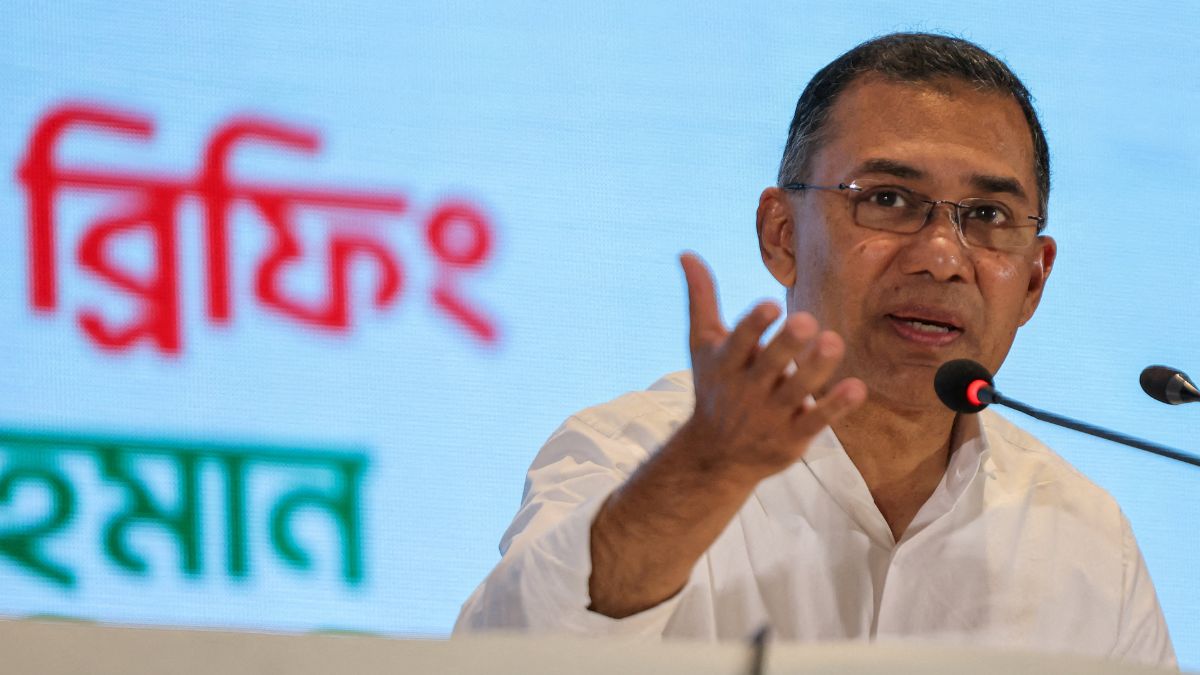
The centre-right Bangladesh Nationalist Party (BNP), now under the leadership of Tarique Rahman, has secured a dominant mandate in the Bangladesh’s first national vote since the removal of Sheikh Hasina in 2024.
This result has redrawn the political map of South Asia and placed India-Bangladesh relations at a sensitive crossroads.
India’s relationship with Bangladesh over the past decade was shaped largely by Hasina’s partnership with New Delhi. Her absence from the political scene, along with the re-emergence of political forces once viewed with suspicion in India, has made the future trajectory of bilateral ties uncertain.
With the Awami League barred from contesting and Hasina residing in India following her ouster, opposition forces have filled the political vacuum. The BNP’s sweeping win has been accompanied by the strongest-ever showing of Jamaat-e-Islami in Parliament.
Prime Minister Narendra Modi reached out to Tarique Rahman with a congratulatory message that highlighted India’s intent to maintain diplomatic engagement despite past tensions.
“This victory shows the trust of the people of Bangladesh in your leadership. India will continue to stand in support of a democratic, progressive and inclusive Bangladesh,” Modi said.
How India has engaged with the BNP before
India’s engagement with the BNP has a long history. The party was established in 1978 by Ziaur Rahman, who later served as Bangladesh’s president before being assassinated.
Leadership subsequently passed to Khaleda Zia, whose influence shaped the BNP’s political identity and governance priorities for decades. Tarique Rahman assumed control of the party following her death late last year, returning to Bangladesh after spending 17 years in self-imposed exile.
During Khaleda Zia’s tenure at the head of BNP-led governments, particularly in the 2001-2006 period when the party governed in coalition with Jamaat-e-Islami, relations with India deteriorated sharply.
Indian security agencies accused Dhaka of tolerating the presence of insurgent networks and militant groups targeting India’s Northeast. Reports of Jamaat leaders providing shelter or protection to such elements were viewed in New Delhi as a direct challenge to Indian security interests, reported The Indian Express.
This period left a deep imprint on India’s strategic thinking. When Sheikh Hasina returned to power in 2008, her administration dismantled militant networks and expanded cooperation with India on counter-terrorism.
These measures eased Indian concerns and strengthened bilateral coordination. However, Hasina’s security campaign was also used to suppress political rivals, including BNP and Jamaat leaders. New Delhi, focused on security cooperation, refrained from public criticism of her domestic political strategy.
The collapse of Hasina’s government in 2024 reopened space for opposition parties. With the Awami League sidelined, the BNP and Jamaat entered the 2026 election without their most formidable rival.
Tarique Rahman’s return to Bangladesh was met with mass public mobilisation, and he adopted a conciliatory tone in his first public address. “We have people from the hills and the plains in this country: Muslims, Hindus, Buddhists and Christians. We want to build a safe Bangladesh, where every woman, man and child can leave home safely,” he said.
Both the BNP and Jamaat sought to project moderation in their foreign policy positions during the campaign. The BNP’s manifesto framed its external engagement under the principle of “Bangladesh Before All,” while Jamaat emphasised the importance of cooperative relations with neighbouring countries, including India.
Neither party’s platform highlighted Pakistan, even though Bangladesh’s interim authorities had moved to strengthen ties with Islamabad after Hasina’s removal.
Instead, both parties spoke broadly of engagement with the Muslim world, positioning this as a foreign policy priority alongside regional diplomacy.
What challenges India-Bangladesh ties face
The Hasina question
One of the most immediate and politically sensitive challenges facing India-Bangladesh relations is the presence of Sheikh Hasina in India. After her removal from power in 2024, Hasina took refuge in India, where she has remained since.
A special tribunal in Dhaka has sentenced her to death in absentia for “crimes against humanity” linked to the 2024 uprising. The BNP government has made her extradition an official priority.
For India, the situation presents a complex dilemma. Hasina had been a long-standing partner of New Delhi, and her tenure was marked by close cooperation on security and regional connectivity.
Extraditing a former ally carries reputational and political risks for India, while refusing to do so could sour relations with the newly elected leadership in Dhaka before substantive engagement even begins.
Jamaat-e-Islami’s expanded parliamentary presence means that the BNP faces pressure from its coalition partner to pursue Hasina’s return more aggressively. At the same time, Dhaka’s leadership is wary of Hasina using her time in India to influence political discourse in Bangladesh.
Any public statements by Hasina from Indian soil are likely to be viewed in Dhaka as interference in domestic affairs, adding strain to bilateral ties.
India’s approach to the Hasina question will therefore shape the tone of relations in the early phase of the new government. While New Delhi has signalled its willingness to engage with Rahman, the extradition demand remains a flashpoint with the potential to overshadow cooperation in other areas.
Security cooperation & border management
Security remains a central pillar of India’s engagement with Bangladesh. Memories of the 2001-2006 period, when militant groups targeting India’s Northeast reportedly operated from Bangladeshi territory, continue to inform New Delhi’s strategic outlook.
The BNP’s renewed partnership with Jamaat-e-Islami has revived these concerns.
Indian intelligence agencies have expressed apprehension about the possible revival of militant infrastructure in border regions and the potential re-entry of hostile networks that had been dismantled during Hasina’s tenure.
Particular attention has been drawn to vulnerabilities near the Siliguri Corridor, often described as India’s “Chicken’s Neck,” which links the northeastern states to the rest of the country.
Border management is another source of friction. India has long sought to curb irregular crossings and smuggling along the India-Bangladesh border. Bangladesh, in turn, has criticised incidents involving the use of force by Indian border personnel, arguing that civilian deaths along the frontier fuel public anger.
New Delhi has sought to maintain channels of communication with both the BNP and Jamaat leadership to ensure continuity in counter-terrorism coordination. India’s priority is to avoid a return to the security environment of the early 2000s.
Safety of religious minorities
Following the 2024 upheaval, reports of targeted attacks on Hindus and other minority communities increased. For New Delhi, the treatment of minorities is a key metric of Bangladesh’s internal stability and its commitment to inclusive governance.
While Indian officials have raised the issue diplomatically, the responsibility for curbing extremist and anti-minority elements ultimately rests with Bangladesh’s leadership. The BNP’s political interest in maintaining social stability intersects with India’s concerns over regional security.
Water-sharing disputes
Longstanding disagreements over shared rivers remain a structural challenge in India-Bangladesh relations. The Teesta River, which flows from India into Bangladesh, has been a persistent source of political contention.
Tarique Rahman has pledged to secure what he has described as a fair allocation of Teesta waters, framing the issue as one tied to Bangladesh’s economic survival and agricultural stability.
The timing of Rahman’s pledge coincides with another looming test: the 1996 Ganga Water Sharing Treaty is set to expire in December 2026.
Renegotiating this agreement will require high levels of diplomatic trust at a moment when bilateral ties are already under strain from political and security concerns. Water-sharing arrangements are politically sensitive in both countries, given the impact on farming communities, livelihoods and regional development.
Trade, connectivity and people-to-people engagement
Bangladesh is India’s largest trading partner in South Asia, with commercial links spanning textiles, energy, manufacturing and infrastructure development.
Both governments have a shared interest in ensuring that trade flows remain uninterrupted, as economic disruption would carry domestic political costs on both sides of the border.
India has invested in connectivity projects designed to link its northeastern states with Bangladeshi transport networks, providing easier access to ports and markets. These initiatives are central to India’s strategy for integrating its Northeast with regional supply chains.
For Bangladesh, improved connectivity offers economic opportunities through transit fees and trade facilitation. However, popular scepticism about India’s regional influence means that such projects require careful political management in Dhaka.
People-to-people ties are another dimension of the relationship with tangible implications for public perceptions. Large numbers of Bangladeshi citizens travel to India for medical treatment, education and tourism.
Expanding long-term and multiple-entry visa regimes has been identified as a way to build goodwill and reduce bureaucratic barriers.
At the same time, irregular migration from Bangladesh into India has become a politically charged issue in several Indian states. The topic features prominently in domestic political debates in India and has implications for bilateral diplomacy.
Managing migration in a manner that is both humane and cooperative is essential to preventing domestic political narratives from spilling over into foreign policy disputes.
China and Pakistan in focus
Tarique Rahman has outlined economic recovery, governance reform and law and order as immediate priorities for his government. In his first public comments after the election, he said, “We have very serious challenges to face … tackle the economy of the country … to ensure good governance.” He also emphasised the need to encourage business activity and expand employment opportunities.
China features prominently in Bangladesh’s development strategy. Rahman has described Beijing as a “development friend,” indicating that his government intends to continue working with China on infrastructure and economic projects.
Analysts note that substantial economic incentives from China could reinforce Dhaka’s engagement with Beijing. China is already Bangladesh’s largest supplier of military equipment and a major financier of infrastructure, raising Indian concerns about Beijing’s expanding footprint in the Bay of Bengal region.
Pakistan’s re-engagement with Bangladesh following Hasina’s removal has also attracted attention in New Delhi.
Early 2026 has seen moves to establish direct maritime links between Chittagong and Karachi, as well as discussions over potential defence procurement. For India, any deepening of Pakistan’s influence in Bangladesh is viewed through the lens of regional security competition.
Against this backdrop, India’s strategy is to maintain engagement with Dhaka across multiple fronts — security cooperation, trade, connectivity, development assistance and social exchanges — to ensure that Bangladesh’s diversification of partnerships does not come at India’s expense.
With inputs from agencies

 "Iran War News Live: Azerbaijan withdraws envoys from Iran after drone strike on its airport")
 "'Hopeful not confident': Finnish President on a peace deal between Russia and Ukraine")
 "Decision to attack Iran taken after Modi had left the shores, says Israeli foreign minister")
 "Why US has given India a 30-day waiver to buy Russian oil")
 "Iran War News Live: Azerbaijan withdraws envoys from Iran after drone strike on its airport")
 "'Hopeful not confident': Finnish President on a peace deal between Russia and Ukraine")
 "Decision to attack Iran taken after Modi had left the shores, says Israeli foreign minister")
 "Why US has given India a 30-day waiver to buy Russian oil")