 "PrSM Ballistic Missiles, Lucas drones, B-2 bombers: The weapons deployed by US in Iran")
The war in Iran continues to rage.
Washington has announced that a number of high-ranking Iranian officials, including Supreme Leader Ayatollah Khamenei, have been killed as part of ‘Operation Epic Fury’ in a joint operation with Israel.
“No nation should ever doubt America’s resolve,” US Central Command (Centcom) said on Sunday. Iran, meanwhile, has already conducted strikes on a number of Gulf nations in retaliation and vowed revenge on the United States.
But what weapons has the United States deployed in Iran?
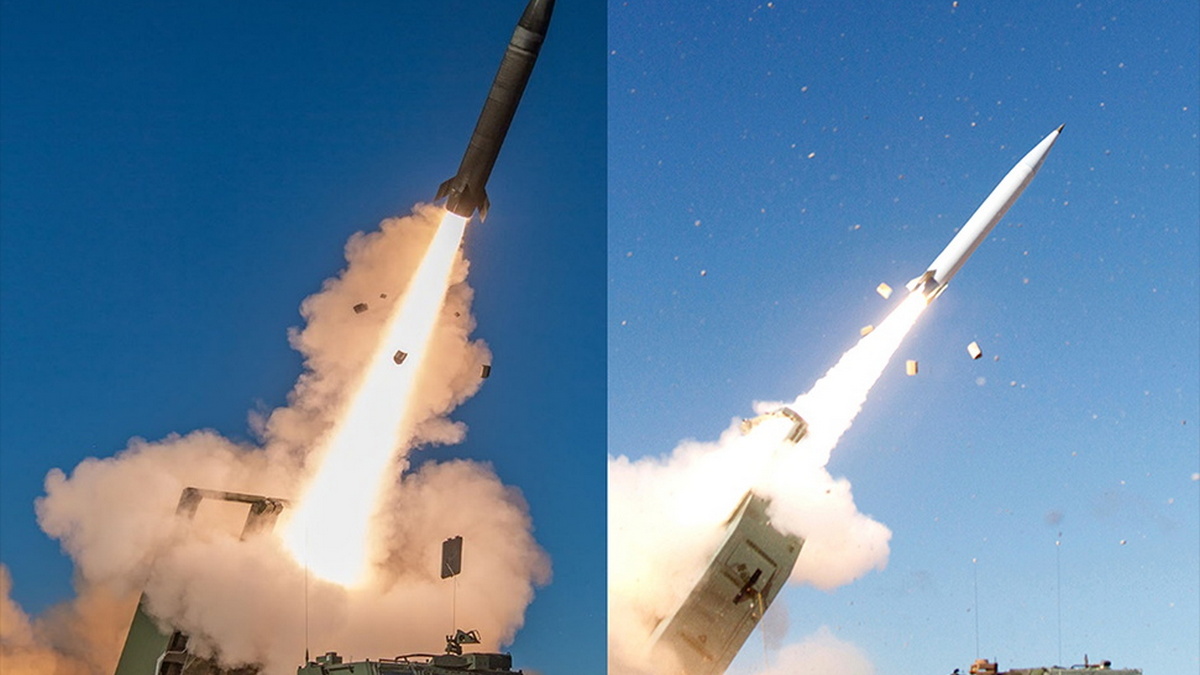
PrSM Ballistic Missile
The Precision Strike Missile (PrSM) is a short-range weapon made by Lockheed Martin.According to The War Zone, this is the first time this missile, a successor to the Army Tactical Missile System (ATACMS), has been deployed in combat. It was launched from a wheeled M142 High Mobility Artillery Rocket System (HIMARS).
The baseline PrSM model, called Increment 1, can take out targets at least 500 kilometres away. The US Army is aiming to increase that to 650 kilometres. Another longer-range model, which can hit targets up to 1,000 kilometres, is also in the offing.
This compares favourably to the longest-range variants of ATACMS, which can take out enemies at a range of around 300 kilometres.
Lucas drones
According to _Stripes.com,_ Centcom over the weekend announced that the low-cost unmanned combat attack system (Lucas) drones had been deployed in Iran. Task Force Scorpion Strike “employed low-cost one-way attack drones for the first time in combat,” Centcom said in a statement.
Centcom said TFSS was activated in West Asia late last year. “TFSS is designed to quickly deliver low-cost and effective drone capabilities into the hands of warfighters,” the statement added.
The UAV, built by SpectreWorks, an Arizona-based firm, is a reverse-engineered variant of Iran’s Shahed-136 drones. “These low-cost drones, modelled after Iran’s Shahed drones, are now delivering American-made retribution,” Centcom wrote on social media.
According to _CNBC_, each drone costs around $35,000 (approximately Rs. 32 lakh). These drones are far cheaper than other missiles, which can cost millions of dollars per unit. According to Fortune, the US test-fired a Lucas drone from a Navy ship in the Persian Gulf in December.
According to Business Insider, the one-way attack drone, also known as a loitering munition, has been used extensively by Russia during the war with Ukraine, where it has wreaked havoc. Moscow now makes its own variant of the Shahed-136 known as the Geran-2.
The Lucas drone can be fired from catapults, vehicles, and mobile ground stations. It can hover in an area for a long period before swooping down to hit its target and exploding. While the UAV closely resembles the Shahed-136 drone that served as its inspiration, it has a slightly different design.
B-2 bombers
US defence officials have confirmed that Washington deployed the B-2 bombers, known as the B-2 Spirit, to Tehran.
According to Fox News, four B-2 stealth bombers “dropped dozens of 2,000-lb bombs on underground ballistic missile sites in Iran”. Washington previously used these B-2 bombers to target underground nuclear sites in Isfahan, Fordow, and Natanz. On that occasion, the B-2s used the largest conventional bombs in the US’ arsenal – the 13,600-kilo GBU-57 massive bunker busters.
These bat-winged stealth bombers are arguably America’s most powerful aerial weapon. Each B-2 bomber carries an eye-watering price tag of $1 billion (approximately Rs. 9,147 crore). The B-2, which uses four jet engines, can be equipped with both conventional and nuclear weapons.
The B-2 bomber, which can be refuelled mid-air, can reach an altitude of more than 50,000 feet. Built by Northrop Grumman, it has a wingspan of 172 feet. The B-2 bomber can fly 6,000 nautical miles without refuelling. Crewed by a two-person outfit, the B-2 bombers are housed at Whiteman Air Force Base in Missouri.
Tomahawk Cruise Missiles
As per CNN, the US has also fired a number of Tomahawk cruise missiles at targets in Iran. These have been launched from guided-missile destroyers, including the US Arleigh Burke-class vessels in the region, which can be equipped with as many as 96 Tomahawks.
According to Stripes.com, the USS Thomas Hudner and the USS Frank E. Petersen Jr have both launched Tomahawk cruise missiles at targets in Iran.
The missile, which has a range of around 1,600 kilometres, is around 20 feet long with a wingspan of 8.5 feet and weighs around 1,500 kilos. Produced by RTX’s Raytheon unit, the conventional missile can be fired from either land or sea.
According to Pentagon budget data, the US plans to buy 57 such missiles in 2026. They have an average cost of $1.3 million each (approximately Rs. 11.89 crore). There is also an ongoing effort to spend millions to modify and upgrade the weapons, including their guidance systems.
A recent agreement between Raytheon and the Pentagon aims to increase production of Tomahawk cruise missiles eventually to 1,000 units annually.
US and allied militaries have flight-tested the GPS-enabled Tomahawk and used it in operational environments, including when the US and UK navies launched Tomahawk missiles at Houthi rebel sites in Yemen.
Fighter jets
US Central Command released photographs and video footage showing F/A-18 and F-35 fighter jets being used in the strikes on Iran.
The F-35 is a fifth-generation stealth fighter capable of evading radar detection and carrying precision-guided munitions. The United States has deployed F-35s extensively across West Asia.
The F-35s can carry a wide array of missiles, including those designed to seek out and destroy radar installations to blind the enemy. The jets are also in use by the Israeli Air Force. The F-18, made by Boeing, is a multi-role fighter that can conduct both air-to-air and air-to-ground missions, carrying a variety of bombs and missiles.
MQ-9 Reapers
The United States has also deployed MQ-9 Reaper drones in Iran. The Reaper, also known as a Predator B drone, is 11 metres long and has a wingspan of over 22 metres. It has a 240 Knots True Airspeed (KTAS) and a 1,746-kilogram payload capacity, including 1,361 kilograms of external stores.
As per CNN, these drones are remotely piloted and powered by a single-engine turboprop. They are used mainly as attack aircraft to take out “high-value, fleeting and time-sensitive targets”. They are equipped with Hellfire missiles and guided bombs.
With inputs from agencies


 "Iran Israel War Live Updates: UK prepares to evacuate citizens from Middle East amid escalating conflict")
 "The plan to kill a Supreme Leader: How CIA tracked Iran's Khamenei for months and finally struck")
 "From Dubai to Bahrain: How Iran’s relentless strikes have upended world’s busiest airports")
 "Kuwait says 'several' US warplanes crashed, crews safe as Iran continues Gulf strikes")
 "Iran Israel War Live Updates: UK prepares to evacuate citizens from Middle East amid escalating conflict")
 "The plan to kill a Supreme Leader: How CIA tracked Iran's Khamenei for months and finally struck")
 "From Dubai to Bahrain: How Iran’s relentless strikes have upended world’s busiest airports")
 "Kuwait says 'several' US warplanes crashed, crews safe as Iran continues Gulf strikes")