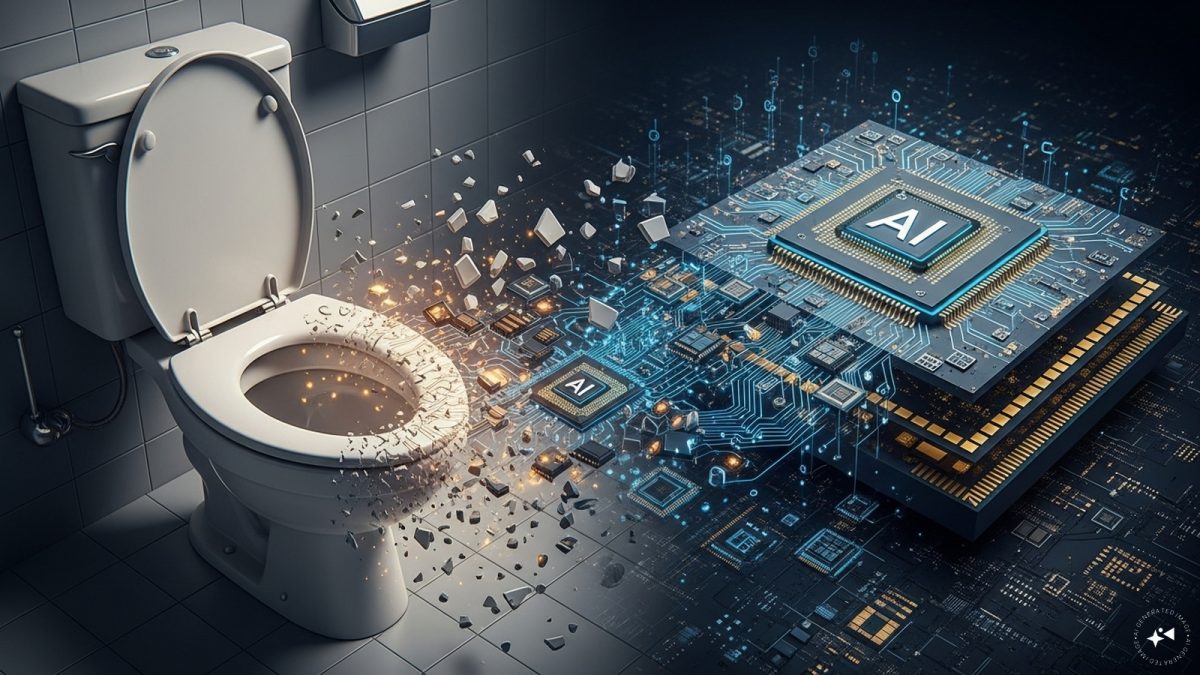
 "As China chokes chip supply, a toilet maker from Japan emerges as a major player")
When you think of Toto Ltd, chances are your mind goes to heated seats, self-cleaning bidets, and the iconic Washlet. But the Japanese toilet giant is now being talked about in the same breath as AI infrastructure and semiconductor manufacturing.
According to the Financial Times, UK-based activist investor Palliser Capital has surfaced on Toto’s shareholder registry, calling the company “the most undervalued and overlooked AI memory beneficiary.” Bold words for a bathroom brand and yet, they might not be entirely misplaced.
From bathrooms to AI chips
For decades, Toto has been quietly perfecting the art of making precision ceramics, the kind not found in your bathroom but deep inside the world’s most advanced semiconductor fabs. These high-performance components help hold delicate silicon wafers steady during manufacturing processes like etching and deposition, where even microscopic contamination or temperature shifts can ruin entire batches.
Toto’s advanced ceramics range includes air bearings, bonding capillaries, and electrostatic chucks designed for chipmaking tools. This might sound worlds away from its glossy showroom toilets, but these materials are critical for maintaining yield and precision in wafer processing. According to recent reports, this division already contributes around 40 per cent of Toto’s operating profit, far from a niche side business.
As global AI demand explodes, so does the need for high-density memory and the chips that power data centres. With China tightening control over rare materials and global chip supply chains under strain, companies like Toto are finding themselves on the frontline of the AI arms race, not through code or chips, but through the materials that make them possible.
Activists see deep value in ceramics
Palliser Capital’s campaign is urging Toto’s management to highlight its hidden strengths, unlock shareholder value, and deploy its roughly ¥76 billion (about $496 million) in net cash more strategically. The investor believes Toto could seize a first-mover advantage by expanding its ceramics operations while competitors play catch-up.
Analysts at Goldman Sachs Group, Inc and other research firms seem to agree that the company’s materials expertise positions it well to benefit from the rebound in NAND and DRAM markets. The numbers back it up: Toto’s shares have surged nearly 40 per cent this year, powered by rising analyst coverage and activist optimism.
Quick Reads
View AllInvestors aren’t just chuckling at the thought of a bidet maker becoming a semiconductor play. They’re following solid revenue signals and rising demand for precision chipmaking tools, the building blocks behind the AI boom.
Still, some of Palliser’s claims, such as a “five-year technological moat”, remain bullish marketing rather than established fact. While Toto’s ceramics are critical to chip manufacturing, the company’s long-term growth potential depends heavily on the unpredictable cycles of semiconductor spending.
Memory makers have been wary of overexpanding capacity, mindful of past market collapses. The current AI frenzy could fade as fast as it flared up, leaving companies overexposed if capital spending cools. For Toto, the challenge will be balancing investor enthusiasm with operational realism.
Yet, its story is emblematic of a broader shift sweeping Japan’s industrial landscape. From Ajinomoto Co, Inc, which makes chip substrate materials, to cosmetics firms developing wafer-cleaning agents, traditional manufacturers are being reimagined as unlikely heroes of the AI supply chain.
In Toto’s case, a company once known for redefining personal hygiene may now be redefining what it means to be part of the semiconductor revolution. If the AI wave keeps rising, this loo maker might just flush away any doubts about its place in tech’s future.


 "Iran War News Live: Azerbaijan withdraws envoys from Iran after drone strike on its airport")
 "'Hopeful not confident': Finnish President on a peace deal between Russia and Ukraine")
 "Decision to attack Iran taken after Modi had left the shores, says Israeli foreign minister")
 "Why US has given India a 30-day waiver to buy Russian oil")
 "Iran War News Live: Azerbaijan withdraws envoys from Iran after drone strike on its airport")
 "'Hopeful not confident': Finnish President on a peace deal between Russia and Ukraine")
 "Decision to attack Iran taken after Modi had left the shores, says Israeli foreign minister")
 "Why US has given India a 30-day waiver to buy Russian oil")