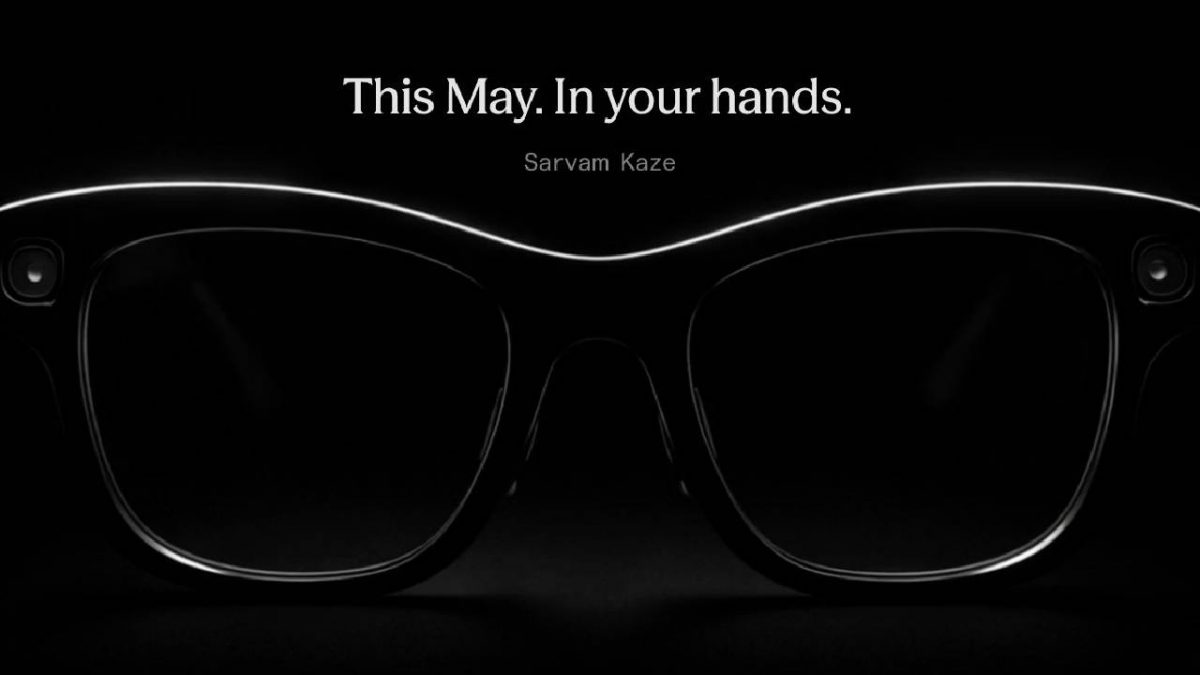
 "Sarvam Kaze smart glasses unveiled: India’s AI-powered answer to Meta Ray-Ban")
Sarvam AI, the Indian startup that has been attracting attention for its AI models and innovation efforts, has officially entered the smart wearables arena. The company recently teased its AI-powered smart glasses, Sarvam Kaze, marking its first hardware push in a category dominated by global players such as Ray‑Ban Meta and Oakley Meta Vanguard.
The reveal came at the India AI Impact Summit 2026 in New Delhi, where the device was showcased and even tried on by Prime Minister Narendra Modi.
Sarvam AI co-founder Pratyush Kumar took to X (formerly Twitter) to share the first glimpse of the glasses and announce the company’s vision for the product. “Launching Sarvam Kaze, our foray into getting our models into your hands with our devices, designed and built here in India!” he wrote.
Drop 12/14: Models, products, impact - today something different, very different. Launching Sarvam Kaze, our foray into getting our models into the your hands with our devices - designed and built here in India! pic.twitter.com/8RnqO16Idg
— Pratyush Kumar (@pratykumar) February 17, 2026
Sarvam Kaze: Launch, design and AI focus
Kumar confirmed in follow-up posts that Sarvam Kaze will debut in May 2026, with a design emphasising a seamless blend of AI and everyday wear. “Designed in India, built in India, fitted with AI from India. All in your hands this May,” he said.
Designed in India, built in India, fitted with AI from India. All in your hands this May. Zoom in. pic.twitter.com/uMlAE02tTS
— Pratyush Kumar (@pratykumar) February 17, 2026
According to Sarvam, the glasses aim to move intelligence from the screen to the real world. They are engineered to listen, understand, respond, and capture what the wearer sees, effectively bringing AI interaction directly into daily life.
Users will reportedly be able to build custom experiences through the Sarvam platform, signalling ambitions not just for a consumer product but a developer ecosystem around the wearable.
Early images and teasers show a sleek glasses form similar to other smart eyewear, with visible cameras embedded in the frame.
This suggests that Sarvam Kaze will offer at least the core features expected from smart glasses, such as audiovisual capture and voice-interacted AI, although full specifications and pricing remain under wraps.
How it stacks up against Meta Ray-Ban
On the surface, Sarvam Kaze resembles its competition. Like the Meta-branded devices now available in India, which come with AI-powered voice controls, cameras and fitness-focused design, the new Indian wearable appears poised to offer similar capabilities.
We tested the Oakley-Meta Vanguard smart glasses during the AI Impact Summit, and if truth to be told, they are impressive and is difficult to compete with.
But the real differentiator could come from its underlying AI models and local focus. Sarvam says the smart glasses will run on in-house AI rather than relying on third-party systems, which might allow deeper customisation for Indian users, especially in regional language support and local use cases, areas where global products often require additional adaptation.
Another key question is how users will interact with AI on the device and what voice or gesture controls will look like compared with Meta’s “Hey Meta” commands and other interfaces.
At the summit, attendees noted that Sarvam Kaze’s integration could extend beyond simple voice commands, hinting at future innovations in how AI and wearables work together.
The preview has sparked curiosity, if not clear answers yet. But make no mistake, Sarvam AI’s entry into the smart glasses race represents a significant moment for India’s tech hardware ambitions and the country’s “Make in India” push in AI and wearable technology.


 "Iran War News Live: Azerbaijan withdraws envoys from Iran after drone strike on its airport")
 "'Hopeful not confident': Finnish President on a peace deal between Russia and Ukraine")
 "Decision to attack Iran taken after Modi had left the shores, says Israeli foreign minister")
 "Why US has given India a 30-day waiver to buy Russian oil")
 "Iran War News Live: Azerbaijan withdraws envoys from Iran after drone strike on its airport")
 "'Hopeful not confident': Finnish President on a peace deal between Russia and Ukraine")
 "Decision to attack Iran taken after Modi had left the shores, says Israeli foreign minister")
 "Why US has given India a 30-day waiver to buy Russian oil")